How ERP Improves Inventory Control and Eliminates Costly Stock Problems
Inventory is the backbone of many businesses — yet it's also one of the most difficult areas to manage efficiently. Too much stock ties up cash. Too little stock leads to lost sales. Poor tracking causes delays, waste, and frustrated customers.
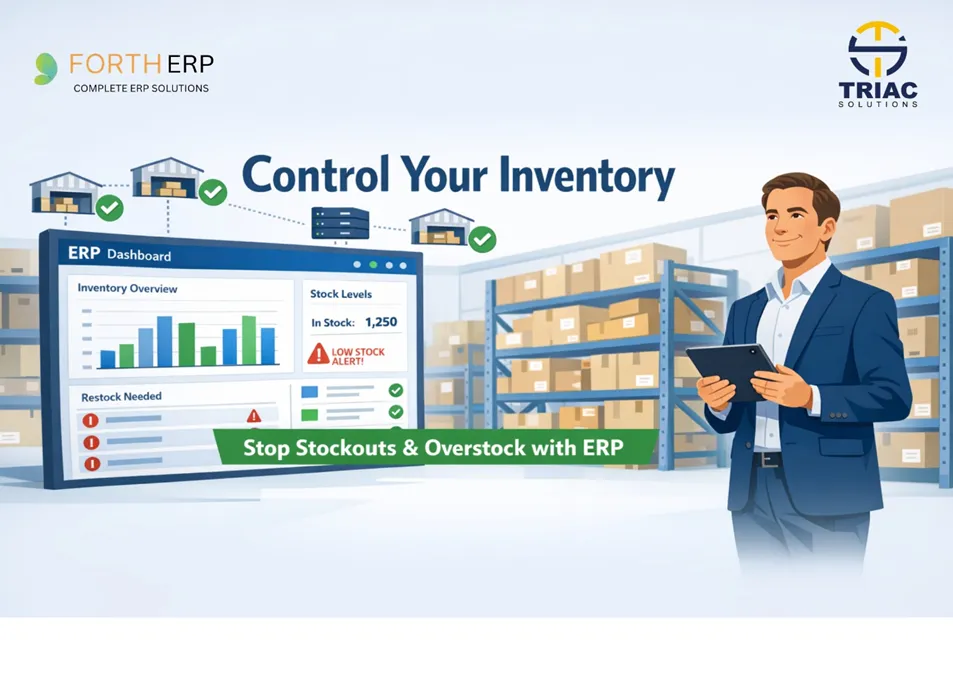
Real-Time Stock Visibility
One of the biggest advantages of an ERP system is live inventory tracking. Every transaction — purchases, sales, returns, transfers — updates stock levels instantly.
- Available stock tracking
- Incoming inventory monitoring
- Low-stock alerts
- Warehouse distribution
Automated Reordering Prevents Stockouts
Running out of products can damage customer trust and revenue. ERP systems monitor stock levels continuously and trigger alerts or purchase orders when inventory reaches predefined thresholds.
- Reduced emergency purchasing
- Consistent product availability
- Optimized procurement planning
- Lower risk of lost sales
Multi-Location Inventory Management
For organizations operating across multiple warehouses, stores, or branches, manual coordination becomes nearly impossible. ERP platforms centralize inventory across all locations.
- Stock transfers between branches
- Location-wise tracking
- Centralized visibility
- Reduced duplication of orders
Reduced Waste and Carrying Costs
Excess inventory increases storage costs and risk of damage or obsolescence. ERP analytics help businesses identify slow-moving items, optimize stock levels, forecast demand trends, and reduce dead stock.
- Better cash flow
- Improved profitability
- Reduced storage costs
Data-Driven Forecasting
Advanced ERP solutions analyze historical sales patterns and seasonal trends to predict future demand, enabling smarter purchasing decisions and improved customer satisfaction.
- Efficient production planning
- Reduced inventory holding costs
- Confident decision-making